
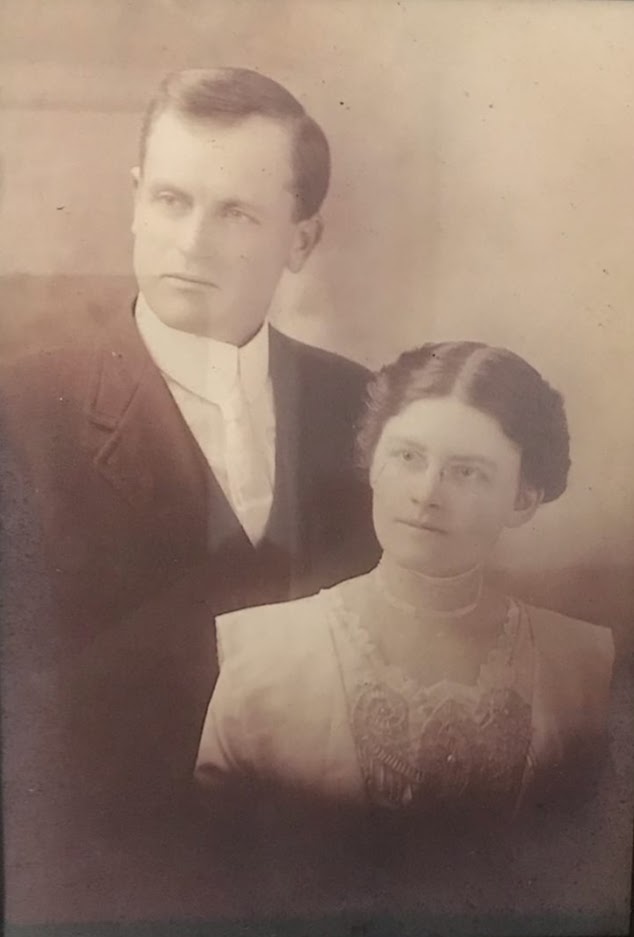
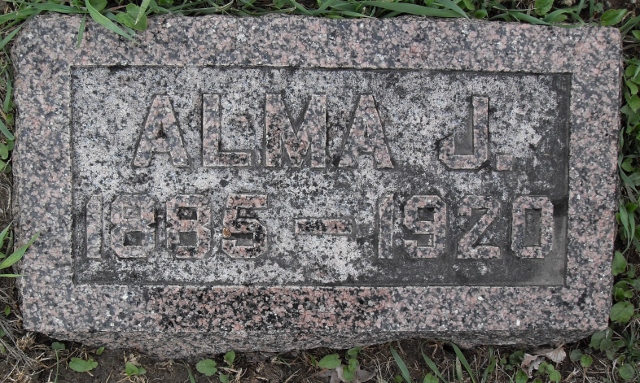
Alma Josephine (pictured above) held many roles over her short lifetime – secretary, Lutheran, teacher, wife, and mother. But it’s her role as the subject of a family medical mystery that is most intriguing to me. Could a genetic condition be the answer to why she and her sisters died young? Or was it simply a tragic coincidence?
Alma Josephine was born in 1885 to Erick and Carrie Bergum, first generation Americans whose own parents had immigrated from Norway. Verdi, Minnesota was a popular immigration destination for Norwegians at the time, and Alma enjoyed a close-knit community life marked by dirt roads, a few essential businesses, and some regular religious activities in the Lutheran church, which she attended with her dear siblings – four sisters (Ella, Emma, Annie, and Rose) and her little brother Arthur. The picture below shows Alma in the back surrounded by her younger sisters Annie (left) and Rose, with Arthur seated.

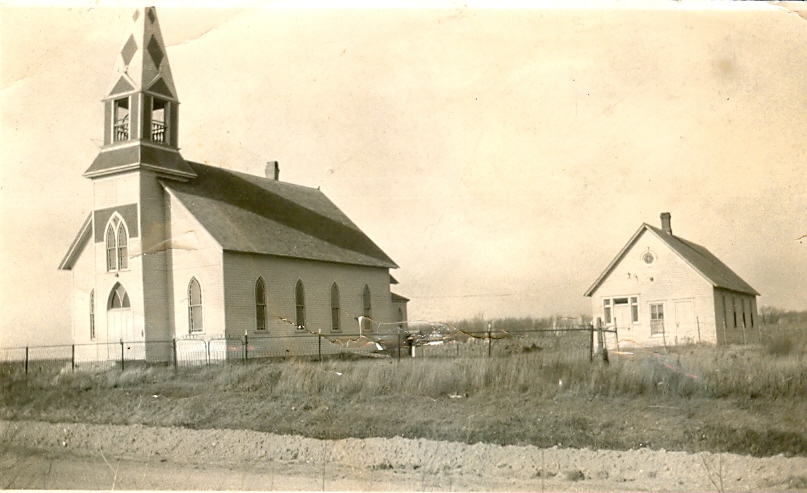
By the time Alma was 15, the family had moved to Graettinger, Iowa, which had recently benefited from the arrival a new railroad, bringing extra commerce, opportunities, and neighbors. Alma’s confirmation took place at Lost Island Lutheran Church (pictured below), also known at the time as Our Saviour’s Norwegian Danish Evangelical Lutheran Congregation. Alma was active as a young woman in the church, serving as a secretary for the Graettinger, Iowa Lutheran League. It is possibly in this capacity that she met Olger Herman Raleigh, who was in the printing business. His parents were also Norwegian immigrants, and so they had a great deal in common.
Alma was dedicated to her community and chose a career as a teacher, attending a teaching institute in Emmetsberg and later teaching in the public schools of Estherville, Iowa. She carried on a romance with Olger Herman (known as Herman) until they married in 1912 in Palo Alto, Iowa.
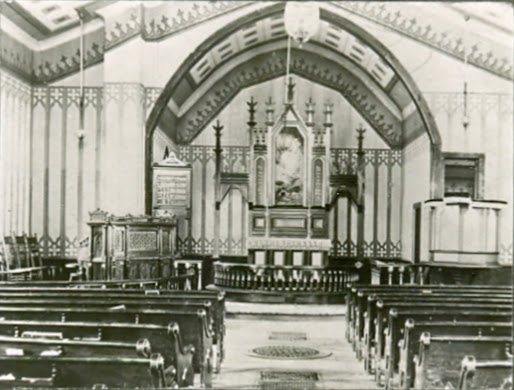
It is at this point in Alma’s sunny life that the story takes a sad turn. Alma’s sisters had unilateraly decided to become teachers, and they were enjoying one another’s company in the small public schools in Estherville Iowa (pictured below) and the joy of being fully a part of one another’s lives. But in March 1913, just a year after Alma’s happy wedding celebrations, her older sister Ella, who had been continuing her education at Ames College, died suddenly at the age of 31. Ella Bergum’s sudden death profoundly shook Alma. She had succumbed, after only five days in the hospital, to “subacute bacillary dysentery”, leaving her family grappling with grief and shock.

Life goes on, and soon Alma had two young children to help soothe her grief. Stanford and Ruth were joyful children. Alma retired to the life of a house wife, taking up the cooking, cleaning, and laundry activities that, without modern appliances, required full time hands to make light work of. Herman continued his work as a publisher entrepreneur, publishing ten newspapers in Iowa, Nebraska, South Dakota, and Minnesota. His work kept him busy and they were a loving, happy family – the picture of the American dream.
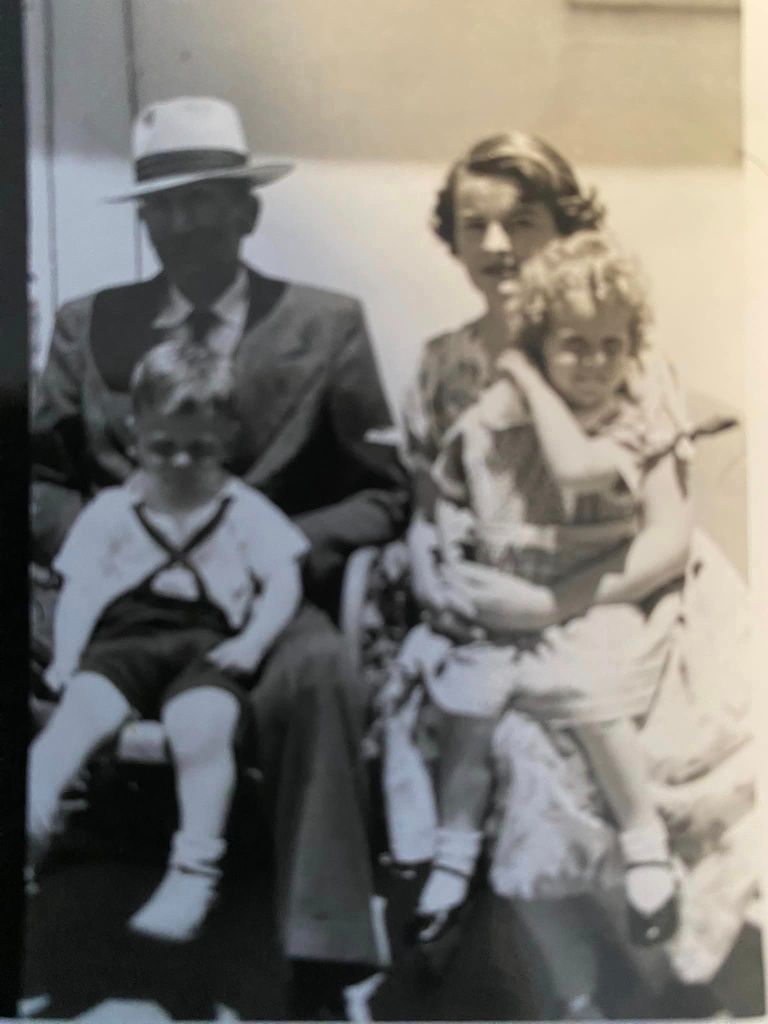
Sadly, just one year after little Ruth was born, Alma’s younger sister Rose Bergum, also a teacher, met her own untimely demise. This death must have cast a profound shadow over Alma’s life, as it mirrored in many ways the tragedy that had struck Ella just a few years earlier. At the age of 29, Rose’s death was sudden and unexpected. A family member said, “She went off to teacher’s college and they got a letter from the president saying she had died. I remember seeing the letter they had kept. Must have been quite a shock to send off a healthy daughter and get such news. My niece looks just like photos of her. From that letter we guessed it sounded like an appendicitis attack.” With no death certificate readily available for either of the sisters, we can only go off of family stories about what really happened. But the death may have deepened Alma’s concerns about health vulnerabilities within her family. Alma turned to her Lutheran roots for comfort during this time and prepared to ride out the grief.
Tragedy hit a year later. At just 35 years old, Alma herself was laid to rest after her life too was cut short amid a surgical operation in Chicago. Her death was steeped in the same cloud of medical uncertainty that had surrounded the deaths of her sisters, and intensified the notion of some kind of hereditary affliction within the Bergum family.
Alma’s death, so soon after those of her dear sisters, shook Herman and the rest of the Lutheran community to their core. The death notice was full of sympathy for Herman and the children.
“Death Notice: 1920: Mrs. O.H. Raleigh Funeral Monday
Graettinger friends of Mrs. O. H. Raleigh were shocked to hear of her death last week, which occurred at Chicago December 22. She had been in failing health for some time. About six weeks ago she was taken to Estherville hospital to undergo a surgical operation. She remained there for four weeks before returning to her home at Emmetsburg. For a time she seemed to improve, but later her strength began to fail and it was realized her condition was serious. She was then taken to the Augustana hospital in Chicago where she underwent another operation. She rallied from the operation and apparently had good chances of recovery but again she failed rapidly died Thursday, December 23. The remains arrived in Graettinger Friday and were taken to the home of her parents, Mr. and Mrs. E.A. Bergum. The funeral was held Monday afternoon. Services were conducted at the house at one o’clock and at the Lutheran church at 1:30, the Rev. S. O. Sande officiating. There was an exceptionally large attendance of friends and acquaintances at the last rites. Many beautiful and costly floral decorations, tributes of living relatives and friends, were given. The is a feeling of relief that the Lord to whom she had devoutly prayed throughout her life would guide the care of her little children in the tender years of their life. To the heart broken husband who has suffered the greatest of personal sorrows that man is called upon to bear, to the little motherless children, the grief-stricken parents and the sorrowing brother and sisters, the Times extends sincere sympathy in this, their darkest hours of affliction and we sincerely hope that time will lighten the sorrow that now bears so heavily upon them.”
Herman’s grief was so great that only two years later, he joined in marriage with Annie, Alma’s younger sister, so that they could lean on one another in the hard times.
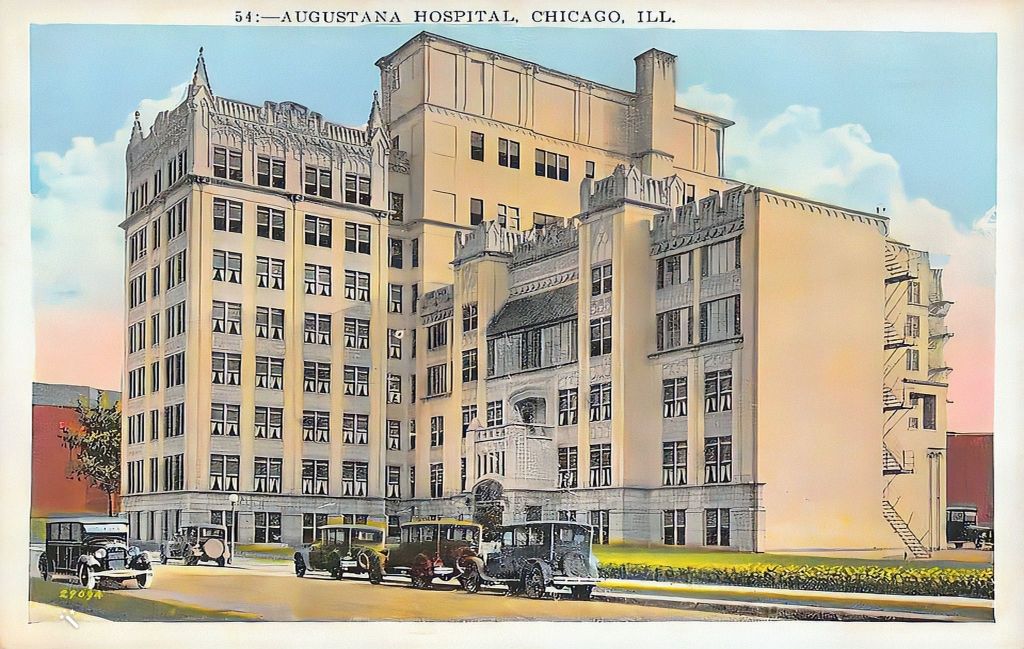
But what actually happened at that hospital in Chicago? Unraveling the mystery behind Alma’s life has been a beautiful struggle. When I first started working on her ancestry story, I spent a good deal of time separating her information from her sister Annie’s. Many amateur genealogists didn’t take the time to differentiate between the sisters, who after all, had married the same man, and had recklessly “accepted” into their trees Annie’s information where Alma’s should have gone.
Once I had all of that straight, it seemed puzzling to me that three of four sisters should die at such young ages in a hospital setting. It seemed too coincidental. I put the thought to the side and continued my research on other family members.
But a few months later, I embarked on a quest to understand my DNA and did the ancestry version of the test. Someone clued me in to the fascinating Promethease software, which you can use to run your DNA through and get a report of which medical conditions your genetic makeup might link you to. It’s a complex bit of software and requires not a small amount of medical knowledge to understand how to use it without freaking out, so proceed with caution! But I figured I would check it out, since the cost is very low.
When I ran my DNA through Promethease, it reported back to me some fascinating information regarding a gene related to having a Pseudocholinesterase Deficiency. Now, I am a carrier for this gene only and do not “express” the actual trait, but being a carrier means that the gene was passed on to me through my family line somewhere.
What is Pseudocholinesterase Deficiency? It’s a genetic condition that affects your ability to break down certain types of drugs used in anesthesia (it is a similar condition to the more commonly known Malignant Hyperthermia). After looking into this condition, I began to wonder if the gene came from this line of sisters, and if the reasons they died in the hospital had anything to do with it. Of course, drawing a direct line from medical mysteries of the early 1900s to genetic testing done on relatives many generations removed would be speculative at best. But it’s fascinating to think!
As I close out the story of Alma (for now), I encourage readers of this blog to start to unravel their own family mysteries, medical or otherwise. Modern genetics sparks new ways to understand and interact with ancestral stories, but you don’t have to divulge your DNA to any company in order to start down the pathway of genealogy if you don’t wish to. Simply piecing together the fragments of a life can bring enormous satisfaction and seeing how the patterns of your family tree interplay can help you better understand your own life’s purpose. Explore, understand, and cherish the mysteries of your genealogy!
 My Kindred Chronicles
Leave a comment