
A Little Advice
The air in Albuquerque was dry, but the summer heat was still stifling. Daisy Pearl Sanders fanned herself as she stepped onto the Greyhound bus, her steps slow but deliberate. At least by 1968, the buses were coming with air conditioning—small blessings. The journey to Amarillo would take most of the day, and these long trips seemed to weigh on her more and more with each passing year. She clutched her handbag, scanning for an empty seat. The bus was crowded, filled with passengers who were already wilting in the morning sun.
A seat by the window near the front caught her eye. As Daisy made her way toward it, she passed a young mother struggling to soothe a fussing baby. The child squirmed in her arms, his chubby fists waving, his face crumpled with frustration. Daisy smiled warmly as she eased into her seat. Once settled, she turned to the little boy, her blue eyes sparkling with mischief. She gave him a wide grin, showcasing all of her perfectly straight white teeth, and the baby stared at her, suddenly fascinated. He reached out, his tiny fingers brushing at her ample, snowy-white curls.
“Carl, no!” the mother scolded gently, pulling him back and producing a toy from her purse with the practiced ease of someone who had done this a hundred times before. She turned to Daisy with an apologetic smile. “I’m so sorry—he’s just bored.”
Daisy chuckled. “Oh, don’t you worry, honey. I love children. He’s a sweet one, isn’t he?” Daisy really did love children—so many had passed through her life, from her own to her grandchildren and even her great-grandchildren. It amazed her how far she’d come, how much she’d built, even after all the hardships she had faced.
While the young mother rocked and soothed Carl, Daisy leaned over, her curiosity getting the better of her. “Where are you headed, if you don’t mind my asking? Visiting family?”
The woman, whose name she soon learned was Cheyenne, gave a tired smile. “Well, I’m going to stay with my folks for a while,” she admitted, her voice dropping. “I had… a situation, you know? Things didn’t work out, and I thought it’d be best to go home until I can get back on my feet.”
Daisy nodded, her expression softening. She knew that story all too well. “It’s good you have your folks,” she said. She glanced at the baby, who had settled down and was chewing on his toy, then leaned closer, lowering her voice conspiratorially. “Cheyenne, darling, would you mind if I gave you a bit of advice?”
Cheyenne blinked, caught off guard, but then smiled. “Of course. I could use all the advice I can get.”
“Well,” Daisy began, “it’s a little bit of a story, but I think you’ll like it. My sister Sylvia gave me this advice back in the 1920s. Sylvia had a way with words—and she’d had a few children of her own by then. One day, her little one—my niece Mary—was playing in the yard, and the poor thing fell right into the well.”
Cheyenne gasped, her hand flying to her mouth. “Oh, my goodness! The poor baby didn’t…?”
“No, no!” Daisy shook her head emphatically. “Not a chance. Sylvia was busy, sure, but never too busy to know what each one of her children was doing at all times! She saw Mary’s little apron strings flutter as the baby fell, and she acted quick as lightning. She called for help, and they got her out just in time.”
“Oh, my!” Cheyenne’s face softened with relief.
“She even made the papers for it,” Daisy continued with a hint of pride. “But the real story is what she said to me later, when I was raising my own babies. She told me, ‘Daisy, just always keep one eye on the baby.’ And you know, I’ve carried that advice with me my whole life. Whether it’s a child, a grown son, or a grandchild, I’ve always tried to keep that eye on them—and it’s never let me down.”
Cheyenne nodded gravely, her face thoughtful. “Thank you,” she said softly. “I’ll remember that.”
The bus hitched to a stop, and Cheyenne gathered her things, lifting Carl into her arms. “This is us,” she said, smiling at Daisy. “It was so nice to meet you.”
“And you too, dear,” Daisy replied, watching as the young mother disappeared into the crowd at the station. The bus lurched forward again, and Daisy turned back to the window. The dry, sun-bleached streets of the Southwest rolled by, but Daisy’s mind was already elsewhere, wandering back through the years to her early days as a mother. Back to her first marriage, to Christopher, and to those two little girls who had been her whole world.

Sylvia’s news article
C.C. Maples
As the bus jostled over rough patches of road, Daisy clutched the armrest to steady herself. She glanced around at the other passengers, taking in the tanned faces of New Mexican natives on their way to work or other destinations. Toward the back of the bus, a man sat with a thick, dark chevron mustache, his head nodding with fatigue. It reminded her of Christopher. He had taken pride in that mustache, once so stylish in the 1920s. Daisy smiled faintly. She supposed they were making a return.
She married Christopher just before Christmas in 1916. He was twenty years her senior but charming, and she’d been swept off her feet. She knew he’d been married before, but his children lived with their mother, and Daisy—blinded by love—thought little of it. Looking back, she could see how foolish she had been, rushing into a marriage that would leave her picking up the pieces. Her mother had warned her that if he left a woman with his children once, he’d do it again. She should have listened. But he was lovely, dashing, and so romantic.
People around town had raised eyebrows. Farmington, Missouri was a small town, and everyone knew each other’s business pretty well. The man at the recorder’s office had looked up from their license, his lips twitching as he teased, “Daisy P. and Christopher C.!” Reverend John Sanders, Daisy’s father, had insisted on a proper church wedding. Her mother, Nellie, had been more cautious. “You just come home to me anytime you need to, Daisy,” she had said, her voice warm with promise. And Daisy had taken her up on that offer more times than she cared to admit. In fact, both of her precious daughters, Faye and Irma Dean, had been born under Nellie’s roof, where Daisy felt safe.
From the start, life with Christopher was a struggle. He was a restless spirit, always dragging Daisy and the girls from one rented house to another, chasing work in the mines. But his effort was half-hearted, and he barely made enough to keep a roof over their heads. Daisy had to work as a laundress to make ends meet, scrubbing clothes until her hands were raw, balancing her long days with raising her two little girls. She wanted to create a home filled with the same love and stability she’d known as a child, but Christopher’s indifference wore her down. Their bickering turned into full-blown fights, and the cracks in their marriage grew wider with each passing year.
Raindrops began to splatter against the bus window, blurring the desert landscape. Daisy’s thoughts shifted to the night it all came undone. It had been raining then, too. The fight was so terrible that her sister Sylvia had sent her husband over to intervene. Things got out of hand in ways Daisy would never forget—ways that left her feeling betrayed and humiliated. For a time, it even strained her relationship with Sylvia. But she swallowed her pride, packed up the girls, and hauled Christopher back to her mother’s house, hoping for a fresh start.
It wasn’t to be. One night, Christopher was simply gone. He’d packed a suitcase, locked the doors, and slipped out through the window like a thief. He left no word, no explanation, only the weight of his absence. That was the end of it. In 1922, Daisy filed for divorce and was granted custody of her daughters. Sitting on the bus now, Daisy thought of that day in the courthouse. Nellie had been by her side, holding her hand as Daisy signed the papers. “You can stay as long as you need,” her mother had whispered. Those words had been an anchor to her.
The bus slowed, brakes hissing, as they rolled into Santa Rosa. Daisy leaned her head against the window, letting the rumble of the road steady her thoughts. As bad as things had been with Christopher, she knew the real devastations happened later. She closed her eyes, allowing the rhythm of the bus wheels to carry her forward in her memories.
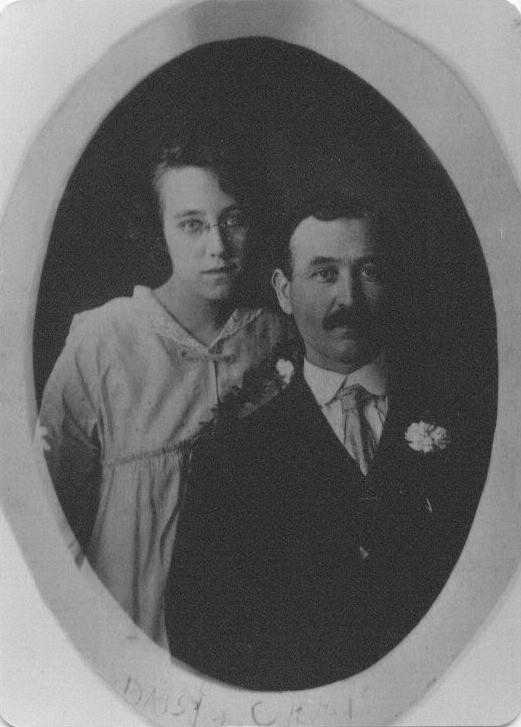
Daisy and Christopher’s Wedding Photograph
Depression
The days after Daisy’s divorce had felt like a blank slate. For the first time in years, she could see a future filled with potential. She was still young and beautiful, and though life had dealt her some hard blows, she refused to feel defeated. So when she met Frank Manning in Kansas City, she threw herself into the relationship with complete abandon.
Frank was unlike any man she had known. He was older than Daisy—older than Christopher had been, actually—but he was steady and full of fascinating stories about his military service. He told her about espionage and adventures overseas, painting vivid pictures of a world she had never imagined. Frank had been married before, to a Dutch woman from South Africa, and between them there had been a little girl, Maggie. But Maggie’s mother had left them behind to pursue a carefree life. Daisy, who knew the pain of abandonment, didn’t hesitate. She was ready to be Maggie’s new mother and build a family with Frank.
Their adventure took them to Montana, where Frank knew of steady work as a carpenter. Daisy smiled faintly at her reflection in the rain-streaked bus window, remembering those chaotic, joy-filled years. The house had been busy with laughter and stories, their family growing larger with each new child. Frank and Daisy had five more children together—four boys and a girl—and their home was alive with noise and love. Daisy’s parents and siblings even traveled all the way to Montana sometimes to visit, bringing a touch of home to her new life. For a time, Daisy’s world felt perfect.
Her smile faded as she studied her reflection, noticing the lines around her eyes. She reached up to smooth one out and realized she was crying. She hadn’t thought about Frank’s death in a long time.
It had come out of nowhere. Daisy had been in a minor car accident with baby Tommy and was at the hospital being checked over when the emergency crew rushed past with a tall, lanky man on a stretcher. Her heart sank; the man looked so much like Frank. Grabbing the nurse’s arm, Daisy demanded to see him. It was him. An abdominal injury, they said—something they couldn’t fix because he’d waited too long to seek help. And just like that, he was gone. It was 1930, and Daisy was now a widow with eight mouths to feed.
The days that followed were a blur. She remembered writing thank-you notes to neighbors who sent flowers, filling out pension and aid applications, and sitting for hours at the kitchen table, her ledger in front of her, trying to make the numbers look better. No matter how many budgets she wrote out, none of them would work. Daisy’s despair grew with every passing week. Finally, she wrote to her mother, Nellie, begging for advice.
Nellie’s reply had been both practical and devastating. Daisy closed her eyes, remembering how her hands trembled as she opened the letter. Her mother had arranged for the children to go to the Elmwood Presbyterian Orphanage back home in Farmington, Missouri. The orphanage could feed and clothe them while Daisy moved back to work and save money. “It’s not forever,” Nellie had written. “You’ll bring them home with you once you’re on your feet.” But even knowing it was temporary didn’t ease the ache in Daisy’s chest as she packed their belongings and made the preparations.
Margaret, 17 by then, refused to go, and Daisy couldn’t blame her. She sent Margaret to live with friends, then bundled Irma Dean, John, Ken, Dick, and Ruby onto the train bound for Missouri. The journey would take four days. Daisy kissed each of them goodbye, tears streaking her face, as they waved and cried from the train windows. A few weeks later, she packed up Faye and baby Tommy and did the same.
The house was quiet as Daisy sorted through the remnants of her life in Montana. In a drawer, she found the newspaper clipping she’d saved—the article about her sister Sylvia’s heroics, when she saved her daughter Mary from the well. “Keep One Eye on the Baby,” the headline read. Daisy clutched it to her heart, feeling the weight of those words in a way she never had before. “I will,” she whispered, vowing that no matter where life took her children, they would always feel her presence.
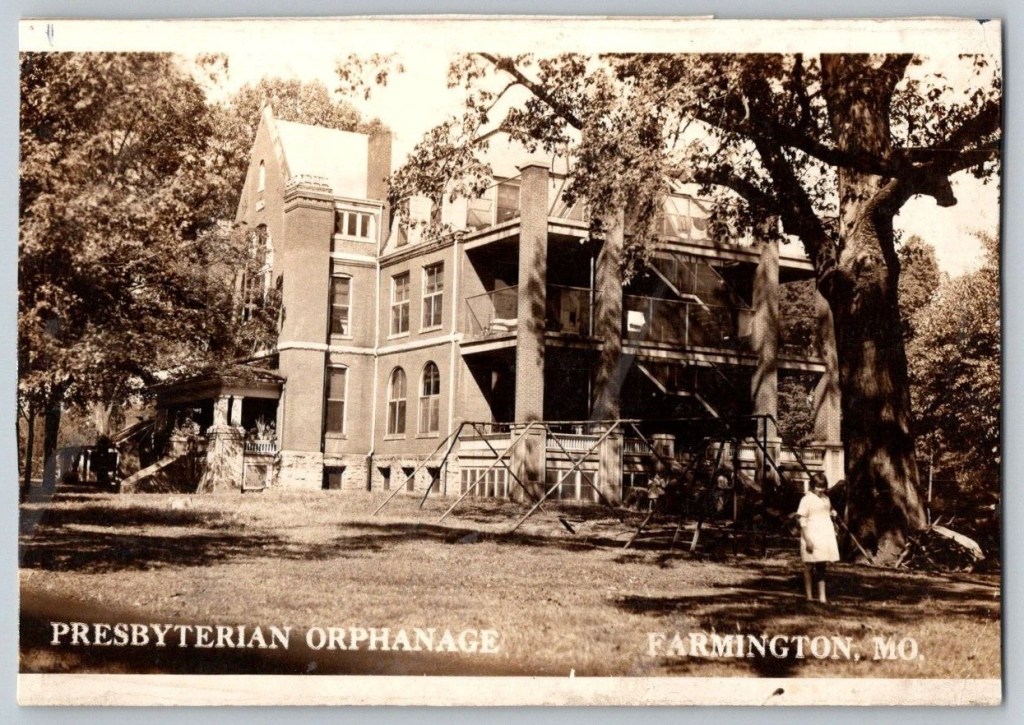
The Orphanage where the children stayed
Holding On
The rain, light as it had been, had finally stopped. They’d crossed into the Texas panhandle, and the bus was pulling into a fuel station. Daisy stretched her legs and decided to step off for a moment, heading into the shop to use the bathroom and get a drink of water. The sun was peeking back through the clouds now, casting long golden rays across the parking lot. She squinted as she made her way back to the bus, her mind heavy with the memories that had been stirring.
Settling back into her seat, Daisy smoothed her dress and turned to the window. The long, empty stretches of highway outside reminded her of another journey she’d made all those years ago. The trip from Montana to Missouri was almost 1,500 miles—an impossible distance for a woman with no money and no means of transportation. So, she had done the only thing she could: she’d sent her belongings ahead by post, packed what little she could carry, and hit the road, determined to hitchhike her way to her children.
She’d been scared, of course, but she remembered thinking of Frank and his stories of adventure. He’d always told her to be brave, and it was for their children that she had found the courage. Daisy had been lucky in some ways. A kind farmer let her ride in the back of his truck alongside crates of produce, and a preacher, upon hearing her father was a pastor, picked her up and prayed with her before sending her on her way with a sandwich and a blessing. But there were long stretches of walking too—miles of open road with no one in sight—and nights spent in barns or church pews, one eye open to the possibility of danger.
By the time Daisy finally reached Missouri, she was exhausted but resolute. She didn’t waste a moment. She placed an ad in the local paper and pinned notes on bulletin boards around town, offering her services for any odd job: laundry, housekeeping, even practical nursing. She wasn’t above cleaning or caring for a wealthy widow if it meant surviving. Her mother’s old ball-bearing bench wringer became her constant companion again, and Daisy scrubbed clothes until her fingers ached. Every spare penny she earned went straight to Elmwood Orphanage to care for her children.
Daisy never let them feel forgotten. She saved for outings to the circus, carnivals, or a Shirley Temple matinee, and she made sure their clothes were neat and presentable. Every weekend, she visited Elmwood, where she would play the big piano in the reception area, her children gathered around her. Even as they grew too big to sit on her lap, she made sure they knew she was there.
One by one, her children left the orphanage and began their own lives. Daisy smiled at the memory of Faye’s wedding day, her oldest daughter glowing with joy as she married a local boy and settled close by. Irma Dean followed soon after, meeting her husband while sewing shoes at the Rice Stix factory, where Daisy herself had taken work to make ends meet.
Her older boys—John, Ken, and Dick—were full of mischief as children but grew into hardworking young men. As the shadow of World War II spread across the globe, they each enlisted in the military, drawn by the promise of steady pay and the chance to see the world. Ruby, her creative little sparkler, left for college to study art, determined to build a life that shone with creative energy. And then there was Tommy, her baby. He had been just a toddler when Frank died, and Daisy had worried endlessly about him growing up in the orphanage. But Tommy had thrived there, and when the time came, he too chose the military. She remembered the pride she’d felt when he told her he was heading to Rome, eager to make his own adventures, just like his father.
Daisy blinked, realizing tears had again welled up in her eyes. She dabbed at them with her handkerchief and gazed out the window at the long road ahead. All of her children had grown into strong, independent people, and though she had given so much to keep them close, she had hoped they would take pieces of their parents’ strength with them into the world.
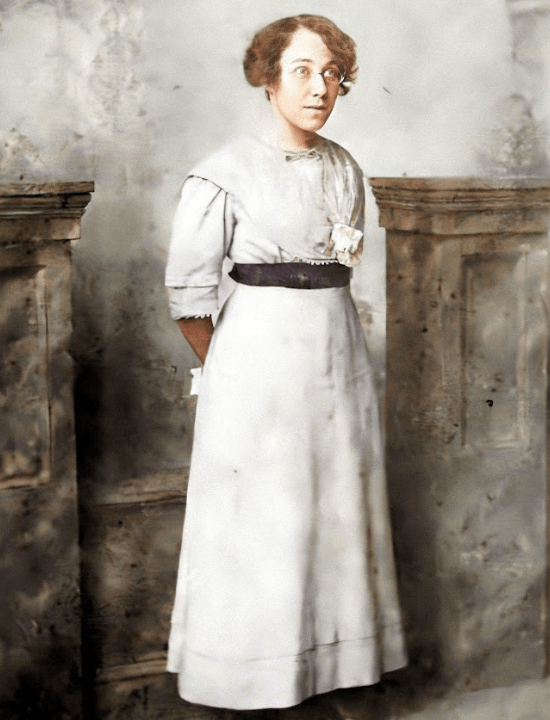
Daisy Pearl Sanders
Reunion
The bus pulled into the Amarillo station, brakes hissing as the engine rumbled to a low idle. Daisy sat quietly for a moment as the other passengers began to disembark. She reached into her purse and pulled out a small hand mirror, patting her curls into place and dabbing at the edges of her lipstick. Her children would be there waiting, and she wanted to look her best. As she gathered her things, Daisy glanced out the window and spotted the small crowd of travelers on the platform. Her heart leapt when she recognized them—her children, grown now but still the same in her mind as the bright-eyed kids she had raised.
John was leaning casually against the wall, his tall frame unmistakable even after all these years. He looked calm, steady, just as he always had been. Irma Dean stood next to him, laughing at something he’d said. Daisy’s chest warmed at the sight of her beautiful daughter, so lighthearted now after the difficult years of deciding to leave her husband. And there was Tommy, her baby—but not a baby anymore. The sight of him took her breath away. His strong posture and confident stance, so reminiscent of Frank, made her heart ache with pride and memory.
Daisy stepped carefully off the bus, the warm Texas air rushing to greet her. She hardly had time to set her bag down before John reached her, scooping her up in a bear hug that made her laugh despite herself.
“You made it!” he said, his voice thick with emotion. “How was the trip? Did you have any trouble?”
“Oh no, nothing I couldn’t handle,” Daisy replied with a soft smile. “I’ve made longer journeys than this one, you know.”
Irma Dean stepped forward next, taking Daisy’s bag from her. “We’ve got everything ready for you at the house, Mom. You’ll have your own room right by the patio, just like you wanted.”
Daisy hugged her daughter tightly. “Oh, Irma Dean, you always know how to take care of business,” she said with a laugh.
And there was Tommy. He approached quietly, hands in his pockets, his shy grin lighting up his face. “Hey, Ma,” he said, his voice gentle.
Daisy pulled him into her arms. “Oh, Tommy, I’m just so proud of you,” she whispered, her voice catching slightly. “So proud.”
The drive to the house was filled with chatter and laughter as they caught her up on all the family news. When they arrived, Daisy stepped inside and paused for a moment to take it all in. The house was warm and welcoming, with sunlight spilling through the windows. The walls were filled with photographs—moments from her children’s lives captured in sepia prints and colorful polaroids. Treasures from years past dotted the shelves: Maggie’s wedding photo, Ruby’s ceramic sculptures, and even some of Tommy’s Army medals. It felt like home already.
Irma Dean served coffee as the family gathered around the table. Daisy sat, listening quietly as the conversation flowed around her. John recounted stories of his business with his usual humor, while Tommy teased Irma Dean about a new flame that had been coming around lately. Daisy let herself soak it all in—their voices, their smiles, the feeling of being surrounded by her family. Her hands rested on the warm cup of coffee in front of her, more content than she could remember being in a long time.
As the evening wore on, Daisy retreated to the quiet of her new room. She sat by the window, gazing out at the garden just beyond. The sun was setting, painting the sky in warm shades of gold and pink. She thought of all the roads she had traveled to reach this moment, both literal and metaphorical. Every trial, every heartbreak, every sacrifice had brought her here. She thought of Sylvia’s advice all those years ago: “Keep one eye on the baby.”
It hadn’t just been about watching over them when they were small, Daisy realized. It had been about showing up, being there for every moment—graduations, run-ins with the law, enlistments, marriages, and heartbreaks. No matter how far her children had gone, no matter how much time had passed, she had always kept her promise. And now, after seventy-four years, it had come full circle.
Daisy smiled softly to herself, her fingers tracing slow circles on the mug handle still resting in her lap. “I kept my eye on them,” she thought. “And they kept theirs on me.”
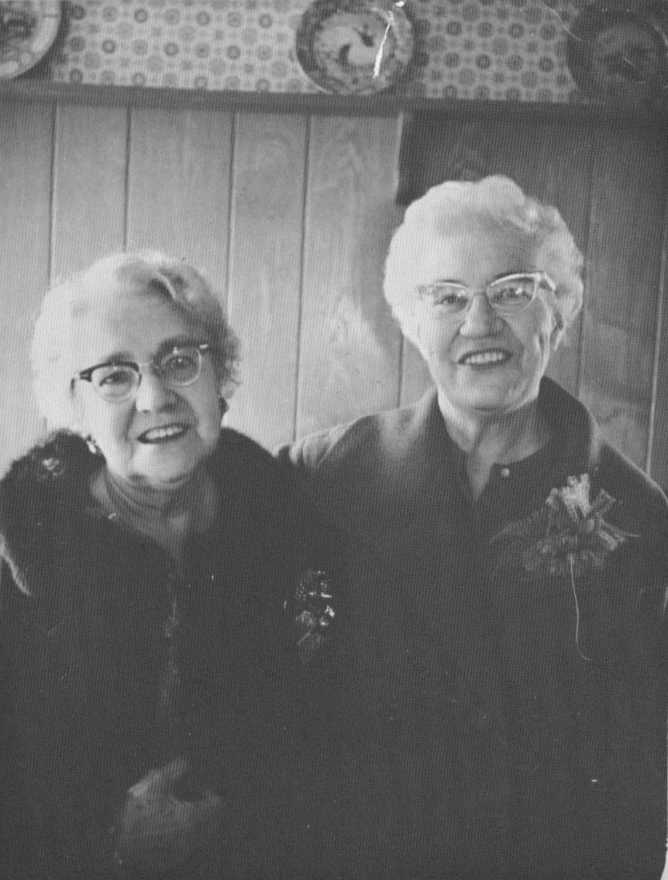
Daisy (left) and her sister Sylvia (right) in later years
Coda: This story is embellished but based on actual stories passed down in the family and documents left behind in genealogical and historical archives. You can read more about this website here: About the Site
 My Kindred Chronicles
Leave a comment