
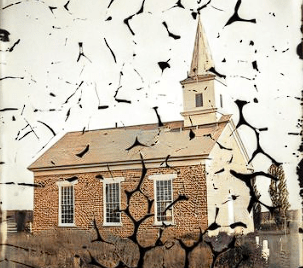
I. Spring Prairie Lutheran Church, Dane County, Wisconsin – 1873
Warm beams of sunlight strolled through the tall windows of the white church, casting long slants of light across dusty pine floorboards. The pews were filled with faces familiar to the brothers – Norwegian-American settlers dressed in their Sunday best, murmuring to one another softly in a blend of English and Sognamål, the dialect from the Sogn district in Norway from which many of them hailed; their eyes were all turned expectantly toward the open doors.
Ambjorn Bergum adjusted his collar. “She’s coming,” he whispered to his brother in English. Botolf Bergum didn’t answer right away. His hand, calloused from a lifetime of farming, rested heavily on the pew in front of him. He stood a little straighter as the hush deepened, but his face remained neutral. Weddings were happy occasions, but it was difficult to feel celebratory today.
Suddenly, the bride appeared at the door of the church. Betsey, her hair tucked neatly beneath a veil of white lace, walked down the aisle with determination. Her face was beginning to show the years of age and stress that came with widowhood, but she was lovely nonetheless. Her dress was simple, carefully pressed that morning, and in the crook of her arm, she held a small clutch of wildflowers. She looked deliberately at Botolf and Ambjorn in turn, and nodded her head solemnly in acknowledgement of the moment, a way to say that her mind was also with their brother.
Botolf’s breath caught. “She looks… just like she did before,” he said softly.
Ambjorn’s jaw tightened as he pushed the emotions back into his throat. “Ja,” he replied. “But it’s not Anders at the altar this time.” He hadn’t needed to say it out loud, but somehow he felt the fact should be acknowledged. He didn’t begrudge Betsey her happy day, it was just that the feeling of loss was still so palpable.
Botolf didn’t look to Ambjorn; instead, he kept his gaze on Betsey as she passed. The last time they had seen her in white, it had been a cooler morning, with frost clinging to the windowpanes of the little Lutheran church. Anders had stood tall then, his coat neatly brushed, his hands slightly trembling. A smile that barely touched his lips, but widened as he committed to a life with his second wife.
That was years ago. Before Anders was gone – a brother whose existence had vanished so quietly that even the land didn’t seem to notice. No announcements. No farewell. Only the slow, creeping silence that settled in his place.
At the front of the church, Pastor C.K. Preus welcomed the bride and groom with a solemn nod. The ceremony began in familiar rhythm – scripture in Norwegian, an occasional sniff from a pews, the creak of boots on polished wood. The air smelled faintly of lilacs and old hymnals. When the vows were said and the couple turned to face the congregation, Preus gestured for the witnesses to come forward.
Ambjorn went first. He stepped up to the table, dipped the quill into ink, and scratched out his name with slow care:
Ambjorn E. Bergum.
Botolf followed. The pen felt awkward in his fingers. His name didn’t flow so much as it pressed itself into the page. He paused when he reached his surname- his thoughts were drifting not to the man beside the bride, but to the one who wasn’t there at all.
He wrote his name quickly:
Botolf E. Bergum.
He set the pen down gently, and as he turned to go back to his seat, the air in the church seemed to shift, and his thoughts drifted back. Before the wedding, before the prairie, across the ocean to the land they had left behind. He could picture clearly those days the three brothers had become pioneers and partners in the adventure that changed their lives.
II. Leikanger, Sogn og Fjordane, Norway – 1847
Making the Journey
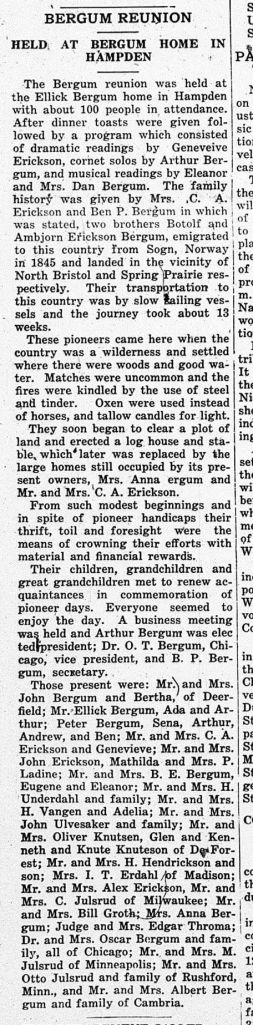
Ambjorn came first in 1845, braving the untested waters of immigration with his new bride Gjorond. They settled in Leeds (then known as Kossuth) county, Wisconsin, where he could make use of his skills as a farmer and maybe help with some carpentry as they built the first public school. He was amazed by the vast, endless stretches of prairies which offered promise for young men who wanted to carve out a place for themselves in this world. He wrote a letter home to Norway and enthusiastically urged his siblings to join him.
Two of his brothers were intrigued enough to say yes. Botolf and Anders settled their affairs and in 1847 they found themselves standing on the dock, contemplating the weeks-long journey ahead of them. Though Botolf had a wife and child, Anders was yet a bachelor, but there were many beautiful young Norwegian women making the same journey. Maybe his future bride was boarding the ship with them? The future held many exciting possibilities.
They left Leikanger and in a blink, the ship was docking in New York harbor. Anders stepped off with calloused hands, a modest satchel, and his eye on a girl named Eli Johannesdatter. They were married before the leaves had fully turned on the mighty oak trees in Dane, Wisconsin, where they opted to settle – a mere 40 miles west of where Ambjorn was living and thriving. Botolf stayed in Dane, too, so that he could keep a watchful eye on his little brother, and they vowed to regularly gather together and support each others’ families in their new lives in NordAmerika. They were the three brothers, all in together.
Settling the Land
The hills in Wisconsin were thick with bramble and pine. Tensions with the Ho-Chunk Nation, marshy swamps, and isolation made settlement challenging, but the brothers persisted, aiming for a peaceful coexistence and staking out parcels near land and water like they’d done back home. They grew their families and endured much hardship, sometimes making them question if it had all been worth it.
Anders seemed to have it the worst. His oldest son Eric was born with severe hearing difficulties, and the birth of his next child marked some of the darkest days of his life – his wife and baby both dying in the months following the birth. It was a dark time in Anders’ life.
The three brothers came together one night to light a fire and talk. Everything smelled like dirt and sap and sorrow.
“Hard to imagine this’ll ever be a home worth building,” Anders said, breaking apart a tree root with his boot heel. Young Eric was in the house, being watched by a local Norwegian woman named Betsey who had come to Anders’ aid in his time of need. She was beautiful, and had made it clear she was interested, but he felt so sad, he didn’t know how he could possibly move on.
He looked past the white hot flame of the campfire and tried to make out the faces in the dark behind it, his brothers with their thriving families and settlements. He knew his brothers had only affection for him (hell, Ambjorn had named his firstborn after Anders), so he tried to quell his resentment. He let out an audible sigh of frustration.
Ambjorn peered at Anders, tossing a clump of tangled grass into the fire. “Home’s just a matter of sweat and Sundays,” he said.
Botolf, already sharpening his ax, nodded. “Less sweat now that we have our oxen. Don’t forget the oxen.” The brothers had gone in together to purchase enough cattle to sustain each of their farming operations, which had contributed significantly to their quality of life. They cleared land, one acre at a time, singing old hymns from Sogn as they worked, the melodies echoing through the timber. The days were long. But the brothers were young, and the world was still being shaped.
Anders grunted, not really laughing at the quip. He felt joyless these days.
Botolf, noting his brother’s bad mood, put a steady hand on Anders’ shoulder. “Brother,” he said. “Grief can turn a man inward, and sometimes, it doesn’t let him go again. Find another woman. Have more babies. You’ll be happy and it’ll do honor to Eli. She’d want you to give a good life to Eric, ok.”
Anders nodded solemnly, but didn’t take his eyes from the ground. He did what his brothers advised, always, ever since he’d stepped onto that ship. He married Betsey and had a few more children, and tried to make a good life.
But by the early 1870s, Anders was gone. Whether claimed by illness, heartbreak, or simply the burden of starting over again, no one could say for sure. A memory of a life with so much potential, who meant so much to his brothers – now just a man who used to live down the road. Later, Ambjorn would admit he regretted the distance. “We should’ve gone to see him more,” he once told his son. “After Eli died, I think he needed us more than he let on.” He never expected the day would come when the Ander’s own legacy might vanish. But the prairie has its own sense of memory, and sometimes it finds ways to remember.
III. Return to the Church, Dane County, Wisconsin – 1873 (continued)
Legacy in a Name
The ink had long dried. The vows were complete. As the congregation filed out into the winter air, the smell of woodsmoke and distant piles of burning leaves was present. Inside the church, Ambjorn lingered near the aisle, watching the bride and groom exchange hushed congratulations with the pastor.
Ambjorn stood near the altar, his hand resting lightly on the back of a pew. He watched Betsey laugh softly at something the pastor had said, her veil now pinned back behind her shoulders. She was radiant—not with girlish joy, but with the grace of a woman who had seen grief and still chosen love.
Botolf approached from the back of the church, his brow furrowed. He carried the registry book in one hand, still open to the signatures. “You saw this yet?”
Ambjorn shook his head. Botolf handed it over without a word.
Ambjorn looked down. The ink was still fresh. The groom’s signature had been written with slow, deliberate care:
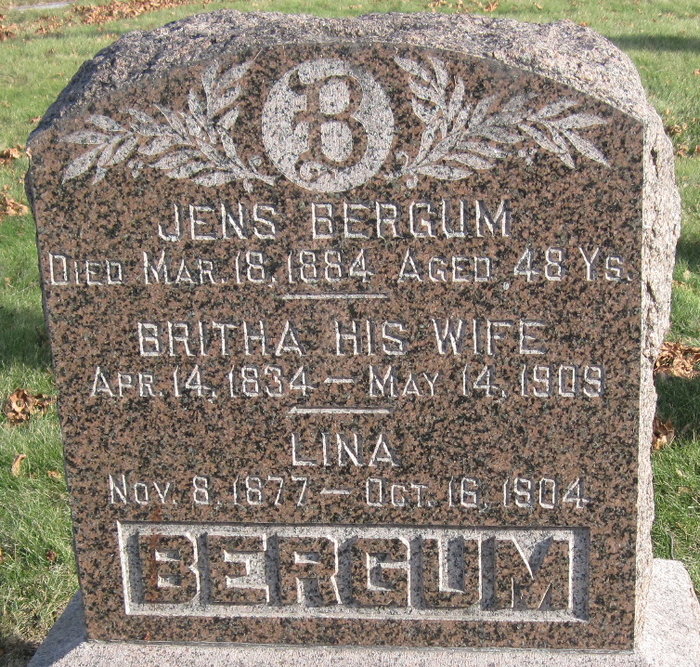
Jens A. Bergum.
Not Andersen.
Ambjorn blinked. “Is this…?”
Botolf nodded. “He asked Pastor Preus before the service. Said it was his wish. That if he was to raise Anders’ child, and be husband to Anders’ wife, then the name should go on.”
Ambjorn looked up slowly, the page still in his hand. “He took our brother’s name.”
“Aye,” Botolf said. His voice caught slightly. “And without being asked.”
For a long moment, neither man spoke. The crack of boots outside, the rustle of branches beyond the windows—it all faded under the weight of that small act.
Ambjorn set the book down on the table at the front of the church and placed his hand over the signature, reverent. “Anders was always the quiet one,” he murmured. “But it seems even in death, he speaks loud enough to be remembered.”
Botolf exhaled, a breath that felt like release. “His name lives. His children will know. And so will theirs.”
They both looked toward the door, where Betsey now stood arm in arm with Jens—with Jens Bergum, Ambjorn thought, letting the name settle into the air around him like the faint scent of lilac and pine that still clung to the old church. “Our new brother,” Ambjorn thought. “Not by blood, but by the name he chose to keep.”
Coda: This story is embellished but based on actual stories passed down in the family and documents left behind in genealogical and historical archives. You can read more about this website here: About the Site
 My Kindred Chronicles
Leave a comment