The lead miner with a heart full of melodies
For an immersive experience, please play this music as you read! It is representative of the type of fiddle music Delmer may have played.
The night was balmy, so the owners of the Miner’s Inn & Restaurant had thrown the windows open to let in a little breeze that mingled with a buzz of anticipation inside. It was 1961, a time of celebration for the Roney family. Work was solid. Daughters and sons were living their best life. All was well. Delmer had worked a long and grueling week in the Viburnum lead mines and he was eager to shed the weight of his week with some music. He rallied the family band along, with Wade on the fiddle, Jim strumming the guitar, and Clifford on the banjo. Delmer himself took center stage, seamlessly switching between the piano and his own fiddle. They played popular music of the day for the local crowd, a mix of work buddies, family, and friends who had come in to grab a bite to eat and take a load off. As he played, Delmer spied his wife Irma as she quietly slipped in the door, ushering his four lovely daughters and son to a table at the side, their faces eager with excitement for the night’s festivities.
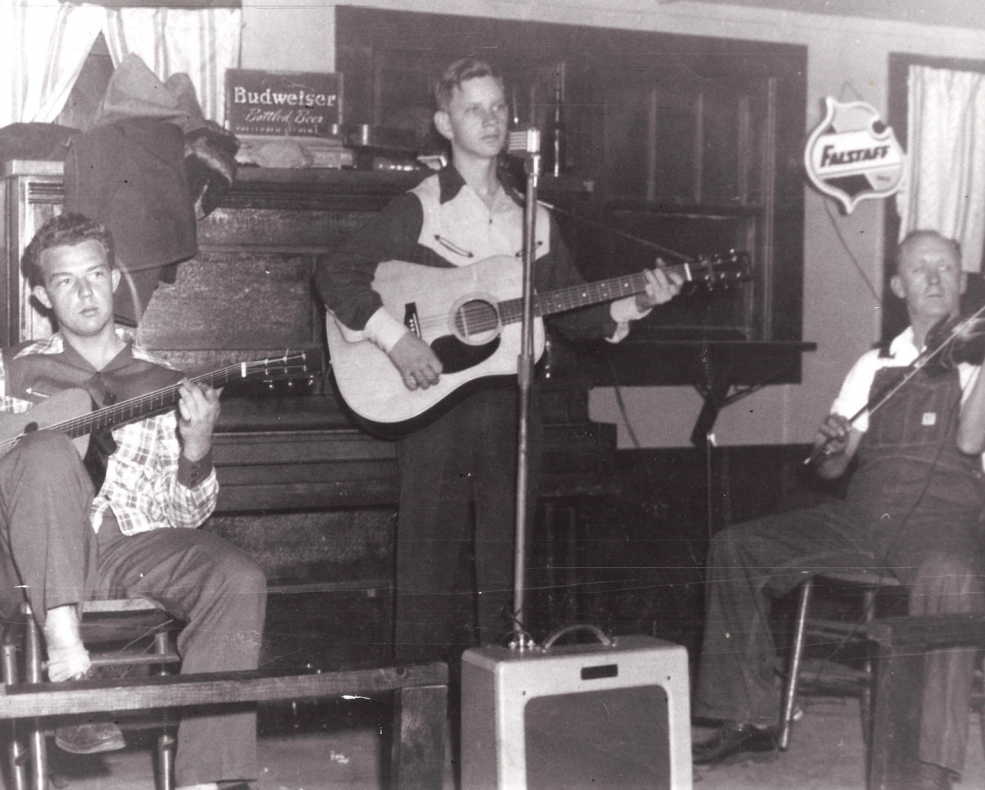
Delmer Earl Roney (on the right in the above picture) made his entrance into the world the day after Christmas in 1912. In Viburnum, a quintessential mining town nestled within the rugged folds of Missouri’s Iron County, his father Frank, a local music teacher, may have serenaded his young son’s arrival with a fiddled rendition of O Come, All Ye Faithful, the gentle melody accompanied by his wife Myrtle’s soft singing.
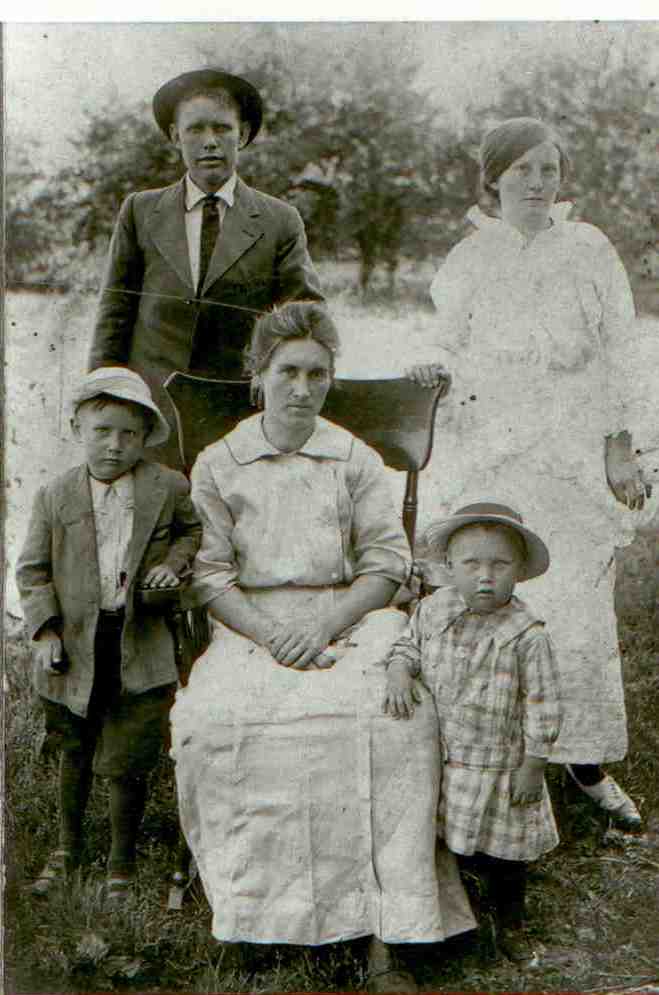
Before the Great Depression redefined the American landscape, Frank and Myrtle had a large farm and ran 100 head of cattle, so Frank and his older brother Wade (pictured above with their parents) likely enjoyed a childhood filled with joyous freedom, running around the family’s land.
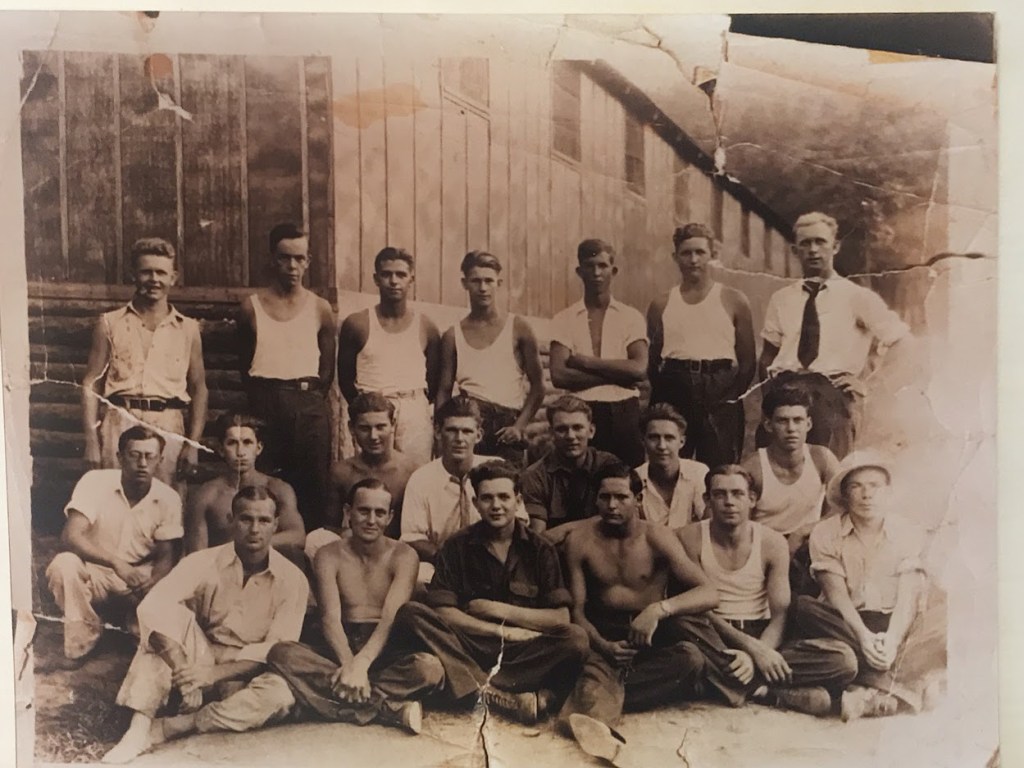
But with the Depression came change. The economic downturn forced Frank and Myrtle to abandon farm life and move to Leadwood, chasing the prosperity and challenge promised by the budding lead mining and timber operations. The family’s migration marked the beginning of a generational shift in employment; First uncles, then brothers, and then when he was old enough, Delmer himself all found new livelihoods with St. Joe Minerals Corporation. (Pictured below, Delmer is in the tie with others from the company at a civilian conservation corps (CCC) camp, where he temporarily worked during the depression)
By his mid-twenties, Delmer’s life had taken a path deeply intertwined with both the rhythms of the natural landscape and the cadence of the local music scene. Alongside his brother Wade, Delmer had spent his school years galloping horseback through the countryside to Davisville, fiddles strapped to their backs. After school, the brothers would fill the night with music, playing long into the morning before racing back to Viburnum. Their musical escapades were the stuff of local legends, and it was during these years that Delmer’s reputation for stirring up more than just music came to light. One night of revelry in Leadwood became so rowdy that it landed him in hot water, nearly ending with jail time for the disturbance. And yet, it was this same spirit and passion for life that led Delmer to put his all into his work in the mines, music playing a vital role in those precious hours at home.
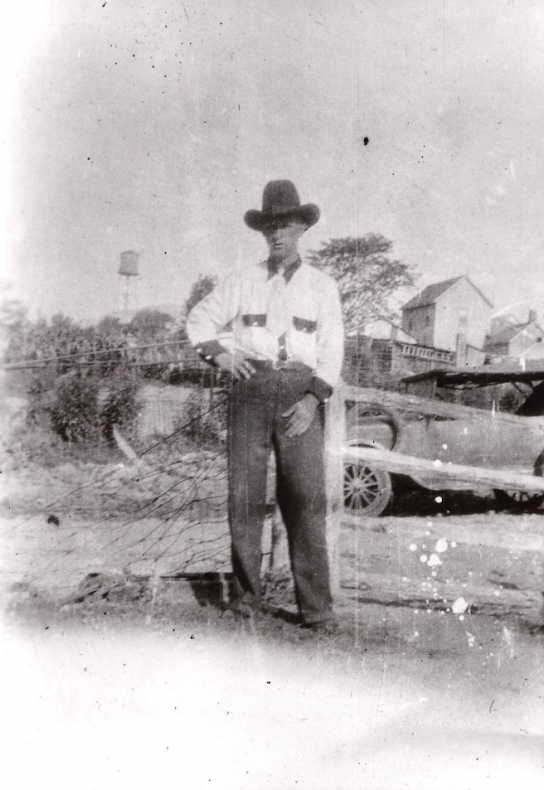
Amidst a life marked by hard work and easy celebrations, Delmer was also on the lookout for a special connection. In 1937, he found what he was looking for. Artie May Hawkins, who was dating Delmer’s younger brother Clifford, introduced him to Irma Dean Maples, a striking young woman who worked with her at the grocer. Irma Dean, whose early life had been marked by abandonment and poverty, was looking for the kind of stability Delmer could provide. They were married in March of 1938, at a quaint church in Farmington, officiated by the Reverand Roland Sims. Their union soon blossomed into a full family, with six perfect children (five of them pictured below), coming about every couple of years apart, adding joy to their home.

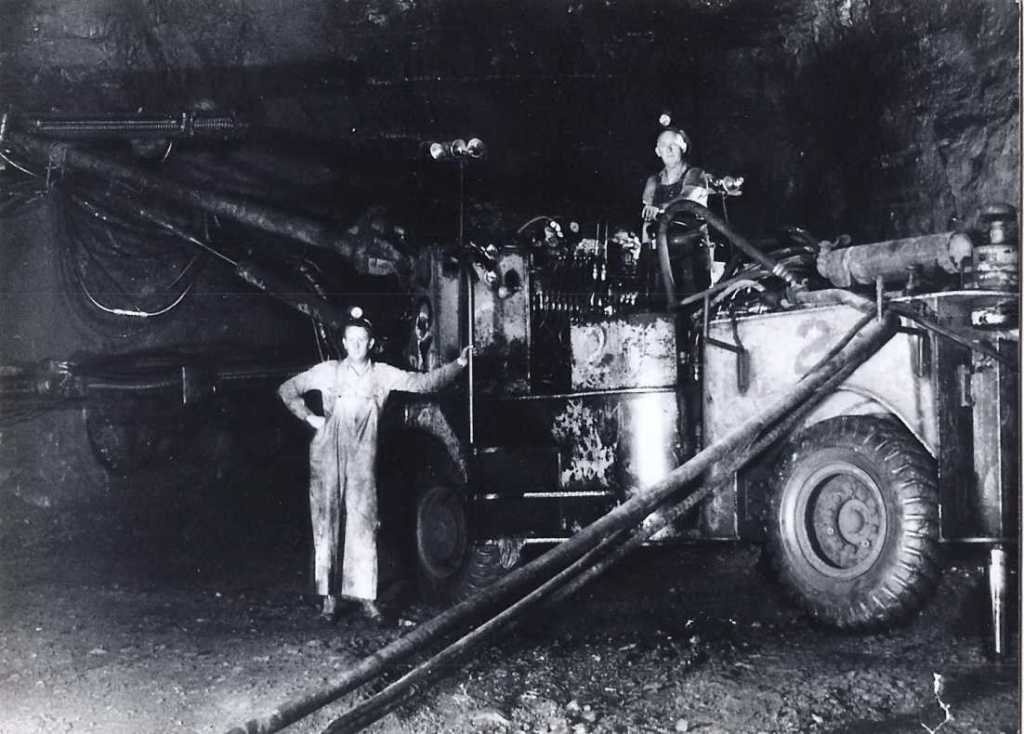
Delmer’s career in the lead mines was as demanding as it was enduring, with the relentless physical toll the mining took on his body to the encouraging camaraderie that fed his spirit. He navigated many roles at the company, including operating driller, development driller, joy loader operator, trackman, general track foreman, driver, shift extra man, St. Joe shovel operator, tractor operator, roofman, and crusherman (Below, a picture of Delmer with mining equipment. He is on the right). Each position layered a heavy cloak of dirt and sweat on the man, who would cast aside his miner’s gear at home to pick up the fiddle and sing away the weight of the work. The music provided a personal sanctuary, but it also created joyful memories for his children, weaving a thread of cheer that dampened the straining sounds of increasing marital strife. Despite the growing troubles in his marriage, which would eventually end in divorce, there was love at home to spare. It was a testament to the complicated life Delmer lived – mining for joy at work and at home alike.
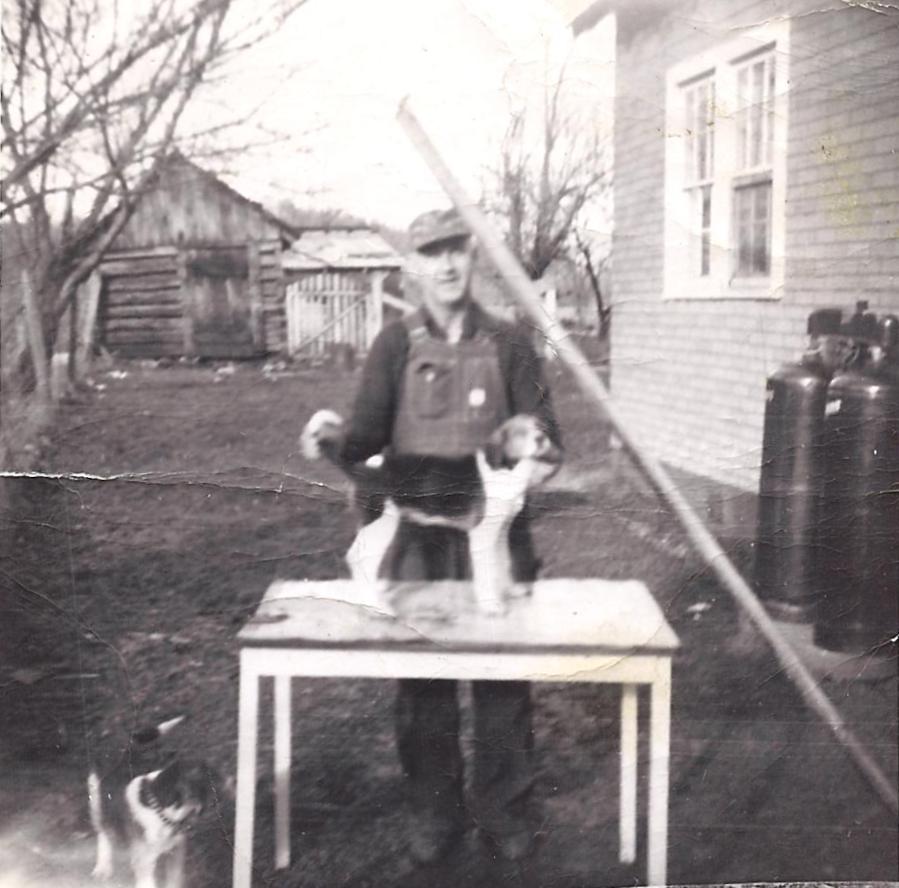
Beyond the confines of the mine and the joy of his music, Delmer found another passion that connected him to his community – the art of foxhunting. He was a respected member of the Missouri Foxhunters Association and dedicated some of his spare time to raising and training foxhounds, many of whom would become award winners. The dogs were a comfort in a life that was increasingly marked by personal drama and strife.
As the years passed, Delmer approached his retirement from the lead mines with mixed emotions. In 1975, after nearly three decades of service, he hung up his hard hat for the last time and once again picked up his fiddle, embracing the slower pace of life among family. Despite a brief renewal of marriage to Irma after their first divorce, they ultimately decided to call it quits for good. Delmer tried his hand at another marriage with Ellen Wisdom, but that was not a union that was fated to last either. He ultimately opted for a quiet yet fulfilling life centered around his passions for foxhounds and music. In his golden years, Delmer continued to play the fiddle at local gatherings, sounding a testament to a life lived with purpose, melodies that would long linger in the memories of everyone who knew him.
 My Kindred Chronicles
Leave a comment