
Rachel Blackwell Roney’s hands had withered a bit as she aged – her knuckles protruded in a knobbly way and once in a while she felt pangs of arthritic inflammation radiating from her slender fingers. But she sewed steadily away at the quilt square that was spread out on the table in front of her, feeling the gentle warmth of the fireplace and the overall cheer of her daughters catching up on their lives together. It was a late autumn afternoon in Dent County, Missouri, and the women of the local chapter of the Women’s Progressive Farmers Association (they all just called it the WPFA) had gathered for their monthly meeting at Rachel’s daughter Edith’s farmhouse. This month, they were finishing work on a memorial quilt that would be hung in the Walker-Roney Post of the Salem Chapter of the American Legion. War was on everyone’s mind more and more as the thirties were drawing to a close, and everyone was doing some heavy reflecting on the conflicts that had come before.
Rachel, the matriarch of the family, felt the weight of family history on her shoulders. She surveyed the room of women from the WPFA who had gathered there, and settled her eyes one at a time on her three beautiful daughters. Edith, her eldest, the practical and nurturing one. She was, of course, busying herself with preparing the coffee and laying out the snacks for the members who had gathered to finish the quilt. There was Cora Bell, Rachel’s politically-active daughter. She was happily making the rounds of the room, introducing people to each other and catching up on neighbor’s lives. And Rachel’s youngest daughter Mary Mariah – who everyone just called Mae – was there too. Mae was her sensitive free-spirited blessing, and was quietly tending to the quilt, watching the crowd around her. They locked eyes, smiling, and Rachel leaned over to see what Mae was working on.
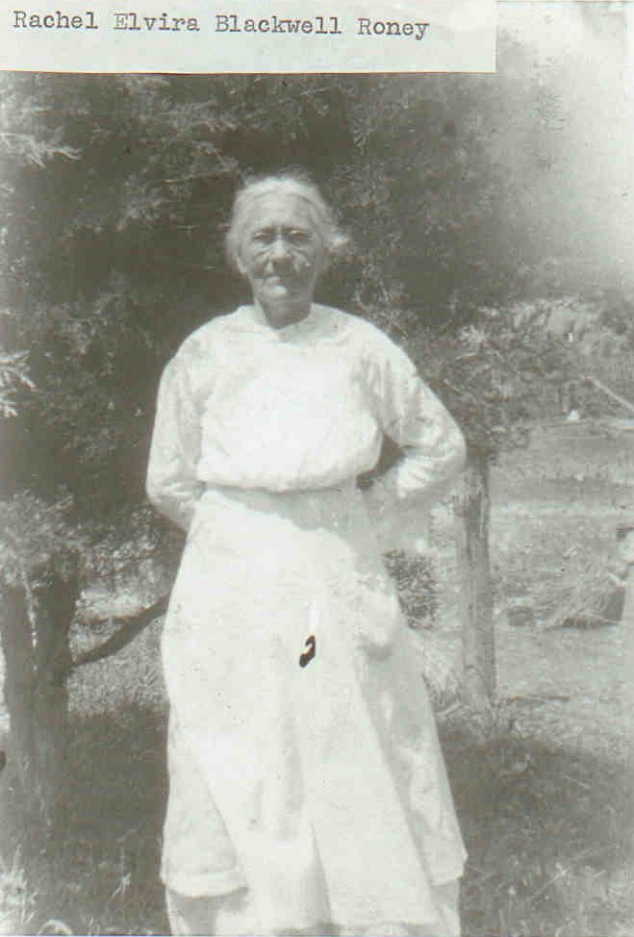
Photo: Rachel in her later years
The Right Side of History
Mae spread the square she was finishing on the table for Rachel to admire. The center of the square featured a river crossed by a rifle and musket, and an imposing “1812” underlining the pieced-together motif. “That’s nicely done,” Rachel murmured. “Your great-grandfather William was in the War of 1812, did you know?” Mae nodded, trailing her fingers around the border of the square thoughtfully. Rachel looked closer at the border and asked, “What design is that? It’s beautiful!”
Mae took a breath, as if preparing herself, and said, “They’re feathers, mom. I know about William. He was also in the Black Hawk War, wasn’t he?” Rachel sat back and looked at her daughter thoughtfully. She seemed like she had something she wanted to talk about.
“Yes,” Rachel answered. “I believe he was. My grandfather Blackwell was a pioneer. He wanted to build a life for future Blackwells that could be safe and peaceful, here in Missouri.” She smoothed down the rough surfaces of the unhemmed edge of the quilt as she spoke, looking around the table to see which squares the piece might match best with.
“But mom,” Mae protested. “His mother was an Indian woman. Why would he go fight against them? It doesn’t seem right.” Mae was tying off a gold thread that she’d used to gild the feather border, not looking her mother in the eye as she continued. “I’m named after her, right? Mary? I feel so connected to that side of the family, and I just feel, I don’t know, funny I guess, honoring someone who wasn’t on the right side.”
Rachel sat straight up and took her daughter by the hand, forcing her to look into her eyes. “Now you listen here,” she said. “The thing about the right side is, everyone always thinks they’re on it, don’t they?” Mae stared into her mother’s intense eyes, the color of warm coffee. “Back then, people didn’t think as hard about it. They just fought – for land, for survival, and for what they were told was the right thing to fight for. They didn’t question it.”
Mae opened her mouth to say more, but it was at that moment that Cora Bell plunked herself down on the bench in between the two, setting her own square down on the table. “Tell me about it,” she complained. “Stitching history into cloth isn’t as easy as it looks, is it?”
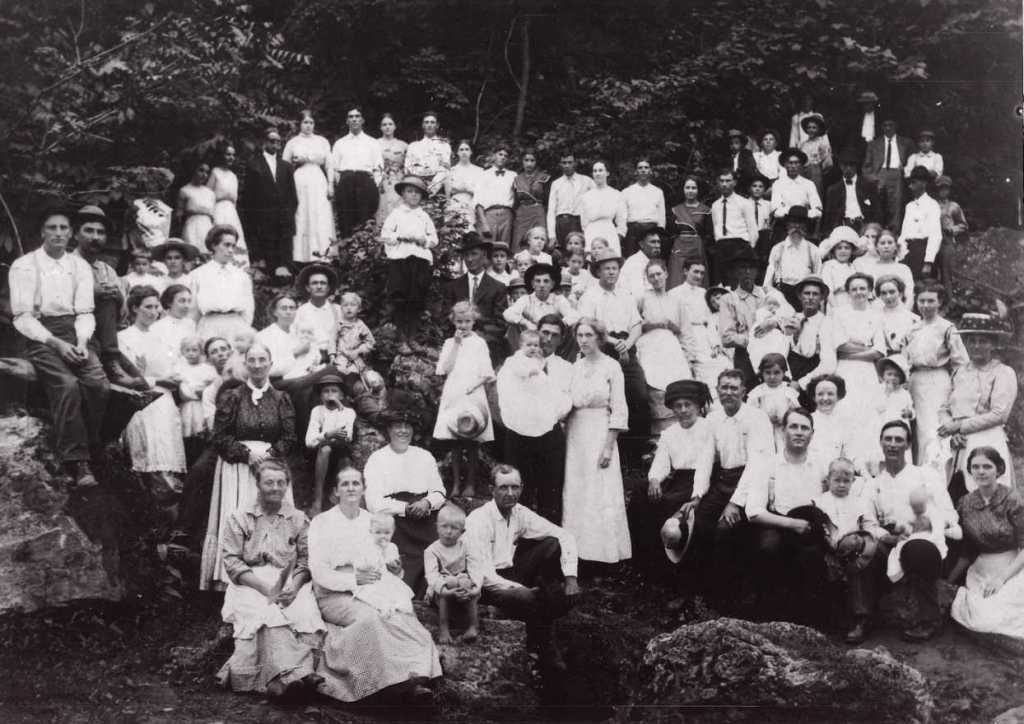
The Roneys at a family renuion
The Boldest Blue
“It’s easier if you actually sit and get the work done,” Mae teased her sister playfully. Cora’s cheeks were flushed from her frantic activity working the room, and it was obvious she hadn’t been doing much sewing.
Cora chuckled good-naturedly at the dig. “Well,” she said, “I guess you can help me get this square finished then!” She smoothed out the square she’d been working on, a red and white mosaic pattern stitched with deep, striking blue fabric accents. The blue color was bold, and caught Rachel’s aging eyes immediately.
“That’s quite the color choice,” she observed wryly, bringing the fabric closer to her face and squinting through her round gold-rimmed eyeglasses. “I would imagine your Grandma Nancy would have a thing or two to say about this.” Nancy had had a reputation as a scrappy woman with strong opinions about the civil war and its later fallout.
“Oh, I know,” Cora replied breezily, snatching up her mom’s coffee cup to go get her a refill. “You know, I was thinking about Grandma the whole time I was sewing that block together. I could just hear her nagging at me, giving me a whole sermon about the Union blue.”
Rachel set the square down on the table, a sad look taking over her face as she thought about her mother. “Your grandmother had a reason for those feelings. After the war they lost everything they owned to the Union looters – those bummers who came through and stole their property. She foreswore the color blue forever after that, and for that I guess I can’t blame her.” Rachel turned the square this way and that, trying to decide the best orientation next to the 1812 square. “You know, your Uncle William fought for the Union. Broke your grandmother’s heart and she never forgave him for it. But he wasn’t trying to spite her. He just believed in something a little different.” She took the hot coffee mug from Cora with a sad smile. “The war never really left him,” she recalled. “He carried that grief with him his whole life. Thank god for the Veteran’s home that took him in. They saved his life.”
For a while, the women sat in silence, contemplating. Finally, Cora broke the silence. “You know,” she said, “I think this square can be for both of them. For Grandma and Grandpa, who lost so much in the civil war, and for Uncle Will, who held onto his convictions.”
Rachel smiled at her daughter, filled with quiet pride. “That’s a good way to think of it,” she said softly. “A way to honor everyone who was just trying to do the right thing. War is terrible, how it tears up a family. But every generation has their own burdens to bear. Who knows what wars my grandchildren will be grappling with.” Rachel was doing well keeping her motions in check. But just then, Edith sat down at the table, carrying her own square – a bold red square of fabric with a single gold star in the middle.
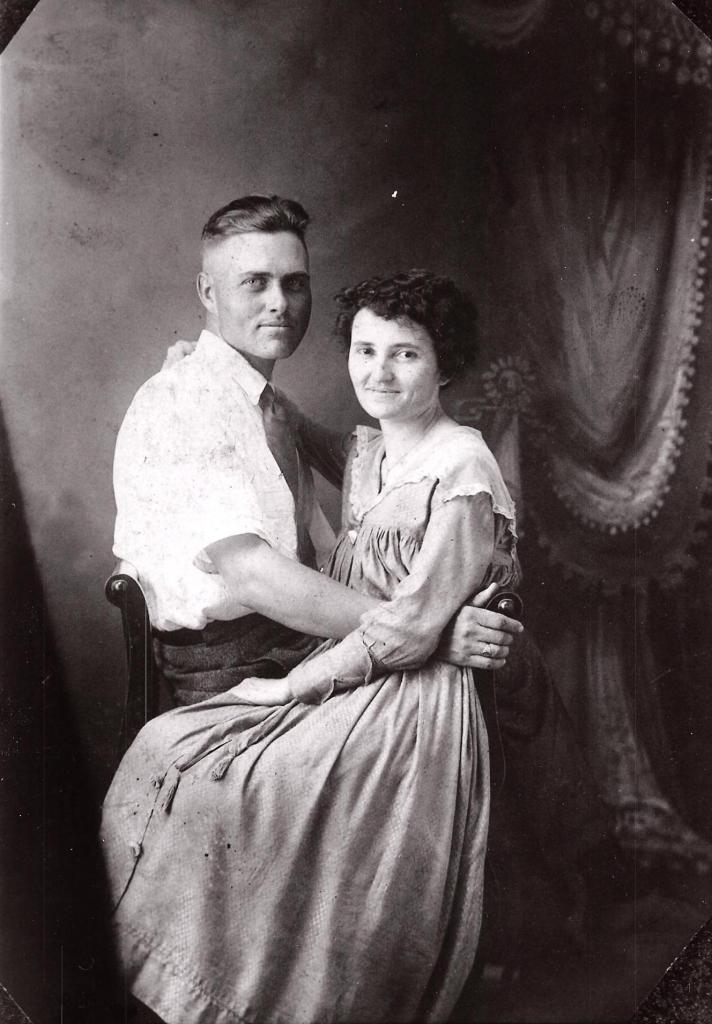
Morris Roney and his fiancé Lilly
The Weight of a Star
The gold star caught the afternoon light, its delicate threads shimmering slightly against the deep crimson. The edges were outlined with subtle, delicate embroidery that Edith had stitched and unstitched more times than she could count, trying to get it just right. Rachel’s eyes pricked with tears; she didn’t need to ask who Edith’s square was for. She clutched up the fabric, touching it gently to her face as if it could bridge the gap that lay between her and her son.
Morris.
Her youngest. The boy who’d left the farm with a grin and a wave to his beautiful fiance’ Lilly, promising he’d be back before the next harvest. But he never came home.
For a moment, the sounds of the WPFA meeting faded into the background—the soft murmur of voices, the gentle clink of dishes, the smooth pull of thread through fabric. Rachel knew the girls wanted her to talk about their brother. Mae put her hand on her mom’s back, comforting her.
Rachel took a shaky breath, her voice steady despite the tightness in her chest. “Your brother was just a boy when he left. Twenty-three when he died. Barely older than you girls were when you married.” She looked down at the gold star again, her fingers smoothing the fabric as if trying to press the memories closer to the surface. “I remember when the telegram came,” she whispered. “It wasn’t fair. We’d seen that letter that the Roberts boy sent saying that nobody in the company was killed. I was sure he had made it through.”
Edith’s eyes glistened, but she blinked the tears away, focusing instead on the square they’d made together. “This will hang in the Legion Hall, you know. The Walker-Roney Post. Everyone will see it.”
Rachel smiled faintly, her heart aching and full all at once. “That’s good. People should remember. Not just Morris, but all of them. The boys who didn’t come home. The mothers who had to carry on without them.” She paused, her eyes distant, as if she could still see him standing there in his uniform, his smile full of hope and promise. “I’m proud of him,” she said softly. “And I’m proud of you girls. For remembering.”
The quilt, now nearly finished, lay spread out on the table—a patchwork of colors and stories, stitched together by hands that had known both love and loss. When they placed Morris’ square in the center, the gold star gleamed like a quiet beacon, compelling them all to remember.
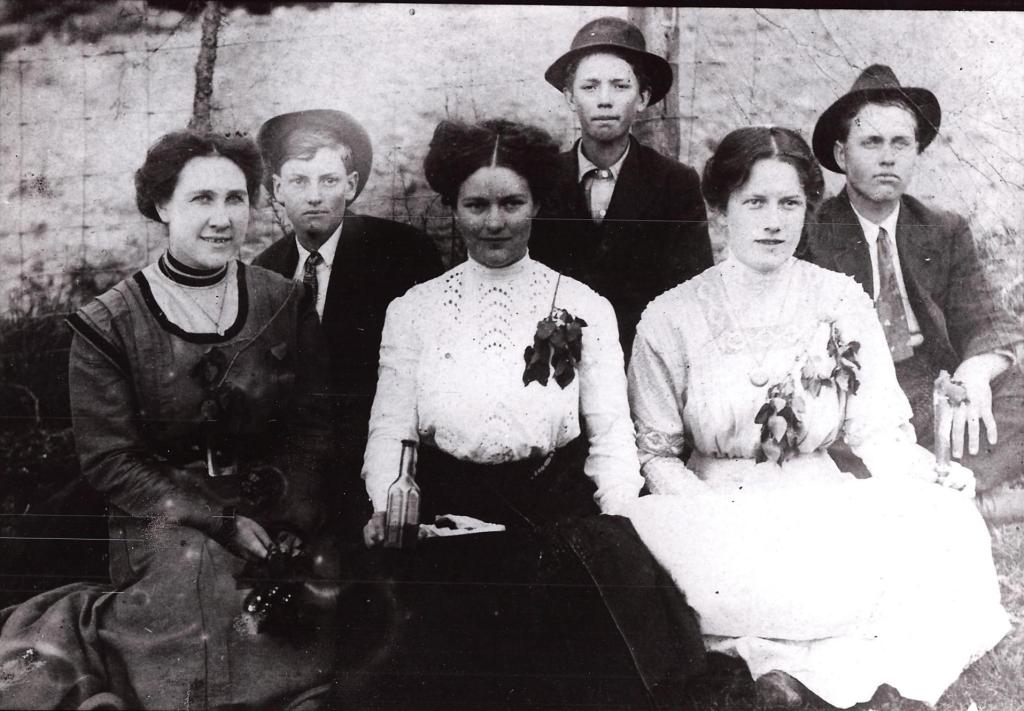
Front row left to right: Mae, Edith, Cora, and Morris Roney (identity of other boys unknown)
Coda: This story is embellished but based on actual stories passed down in the family and documents left behind in genealogical and historical archives. You can read more about this website here: About the Site


Leave a Reply