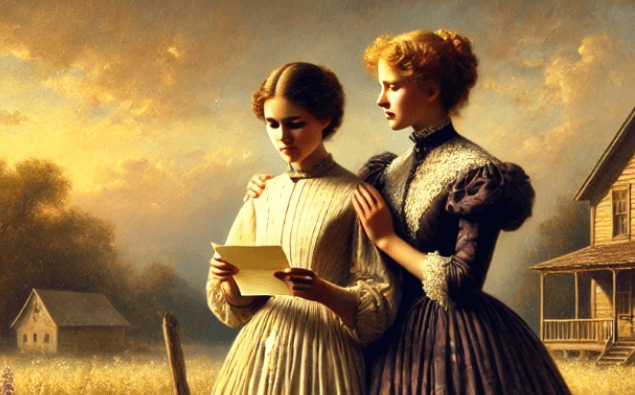
Mary & Amy, the Bryan sisters
The sulphurous tang of H.C. Duke’s smithy usually made Mary wrinkle her nose, but today the forge’s wide-flung windows let in a gentle spring breeze, and the shop felt almost cozy. Mary Bryan, who at 24 years old had moved in with her fiancee’s family, hummed softly as she patted baby Nancy on the back, rocking her in a soothing rhythm. Across from her sat Amy, her sister and ever-present confidante, visiting to meet the baby and help Mary finalize her wedding plans. Somehow, amid the chaos of moving into James’ family home and Nancy’s early arrival, the wedding had been postponed far too long. Now, with her daughter snug in her arms, Mary knew it was time to make things official.
It was 1860, and rumors of a looming civil war buzzed through Missouri like static in the air. Though Mary hated to dwell on such dark thoughts, the whispers of war added a new urgency to the wedding. If James were drawn into the conflict, she needed to ensure Nancy’s future was secure, with the proper papers in place. But today wasn’t a day for heavy thoughts. Amy had taken the baby from Mary’s arms and was grinning mischievously as she tickled Nancy’s tiny chin. The infant responded with a startled, wide-eyed look, followed by a dyspepsic belch that sent the sisters into fits of laughter. They clung to each other as they laughed, nearly toppling from their chairs in the joy of the moment.
“What’s all the racket?” came a playful voice from the doorway. James stepped into the smithy, his broad shoulders framed by the light. Beside him was his older brother Malachi, carrying a bundle of tools to drop off in the shop. James’s face lit up as he spotted Mary, his brown eyes warm and full of affection. Mary had to stop and admire him for a moment, her handsome fiancé so alive and brimming with charm. Then she noticed Amy glancing at Malachi, who, though a little rougher around the edges, bore a striking resemblance to his younger brother. Mary leaned back, a knowing smile playing on her lips, as a thought took root. Perhaps their small wedding would require an extra set of vows. Amy always seemed to follow where Mary led.

July 1860 census (partially showed here) lists Mary living with James, daughter, and father-in law.
Marriage document dated 09 Sep 1860.
Mary & Amy, the Duke sisters
Mary and Amy had only a few precious months to revel in their new marriages to James and Malachi Duke before the Civil War cast its cursed shadow over their lives. Abraham Lincoln had just been elected president, and tensions in Missouri—a state caught between North and South—were at a breaking point. The 32nd Missouri Infantry welcomed the Duke brothers as volunteers, but the moment of their enlistment was bittersweet. After a brief embrace, the brothers were separated into different companies, unaware it would be the last time they would see one another.
Malachi was the first to fall. In the spring of 1863, Amy received the news in the form of a hastily scrawled letter from a chaplain aboard a hospital steamer in Memphis. The details were there, but they were unimportant. Malachi was gone. Devastated, Amy rode to her sister’s house as quickly as possible and threw herself into Mary’s arms. Mary held her tightly, her own tears slipping silently down her cheeks. She whispered words of comfort while her own mind drifted to James, somewhere far from home, fighting not just Confederate soldiers but the disease, hunger, and exhaustion that came with the war conditions in the Deep South. She prayed desperately to God for his safe return.
The war was merciless. Less than a year later, in the bitter winter of 1864, Mary received her own devastating news. James had perished during the Union campaign in Alabama. The letter she received contained few details, leaving her to agonize over the circumstances of his final moments. As she stroked little Nancy’s soft curls—the same golden-brown as her daddy’s—Mary wrestled with the question that consumed her: How can we go on?
In those dark days, it was Amy’s steady presence that became Mary’s lifeline. Together, the sisters shared memories of their husbands, their laughter and love, and grieved over their dreams that were now left unfulfilled. One evening, as the fire crackled in the hearth, they clutched hands and made a quiet vow.
“We’ve lost so much,” Amy said softly, tracing the worn leather of the family Bible as they sat together. The names of their husbands, recorded in the front register, stared blankly up at them in the dim light. “But we still have each other. And as long as we watch out for one another, we can get through this.” Mary nodded, squeezing her sister’s hand tightly. Together, they resolved to rebuild their lives, bound by love, shared grief, and a promise to face whatever the future might bring—together.
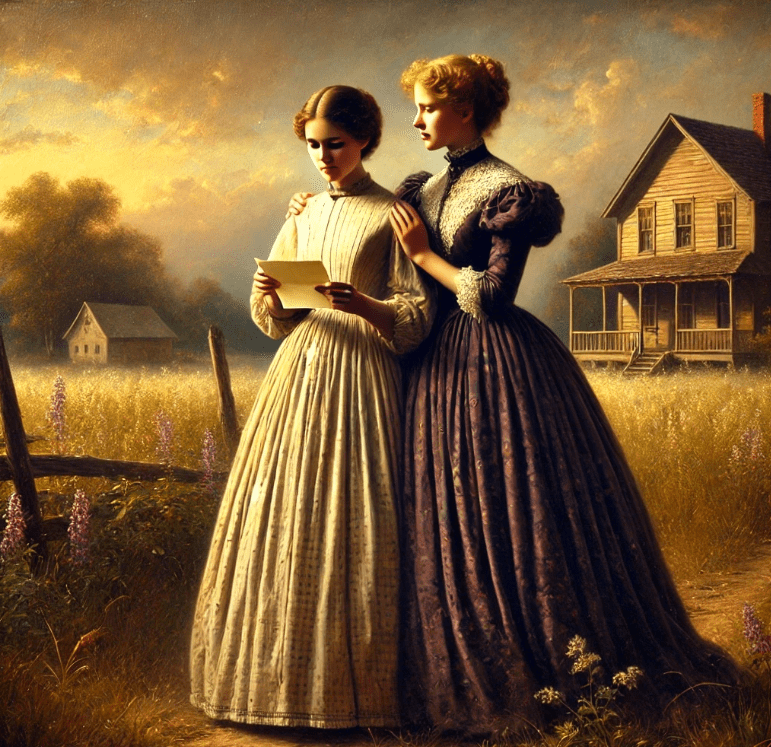
Mary & Amy, the Pyatt sisters
The widowed sisters had fallen into a comforting routine of attending church together each Sunday. Their favorite services were held in the brushy arbors of Pyatt Hollow, where families gathered under a canopy of trees, sharing both faith and fellowship. One of Mary’s favorite preachers was a young and charismatic reverend, Daniel Washington Pyatt, whose sermons often lingered in Mary’s mind long after the service ended. His slender frame, strong jaw, and thoughtful words were a welcome distraction during the long summer afternoons, and Mary couldn’t help but notice how his topics began to veer toward themes of love and new beginnings.
Soon, Daniel took to walking Mary and little Nancy home after church. Their conversations flowed so easily that Mary began to wonder if her heart might be ready for love again. Still, doubts lingered. Daniel was ten years her junior, and she had a child—how could a young reverend possibly see a future with her? Yet, as the weeks passed, those doubts began to fade. Daniel adored Nancy, doting on her as though she were one of his own children, and his gentle devotion broke down Mary’s defenses. When he finally confessed his feelings, telling her he was drawn to her strength and warmth, Mary didn’t hesitate. Life was fragile, and if the war had taught her anything, it was to seize happiness whenever it appeared.
As the wedding preparations began, Mary found herself filled with a sense of hope she hadn’t felt in years. One afternoon, as Amy helped her sort through bolts of fabric for the celebration, a sudden thought brought Mary’s hands to a halt. Setting aside a spool of ribbon she had been considering for trim, she turned to her sister with wide eyes.
“Amy,” she said, her voice wavering. “Are you okay with this? We haven’t been apart more than a day since our husbands passed. I’ve been so selfish, I didn’t stop to think…” Her voice trailed off, awkwardness flickering behind her words. Mary couldn’t bear the thought of hurting Amy, even as she pursued her own happiness.
Amy smiled softly, her warmth dispelling Mary’s worries in an instant. Reaching over, she took Mary’s hand and gave it a reassuring squeeze. “Mary, you aren’t selfish,” she said gently. “This is wonderful. Nancy will have a father, and you’ll have a new start. I’m so happy for you.”
Overwhelmed with relief, Mary pulled Amy into a tight embrace, both of them crying as they held onto each other. When they finally parted, Amy brushed a tear from her cheek, her lips curving into a sly smile.
“So,” she said, tilting her head with a mischievous glint in her eye, “this Reverend Pyatt…does he happen to have a single brother?”
Mary burst into laughter, shaking her head. “Actually, he does! His older brother William—a farmer, I think. I guess I’ll have to introduce you.”
Amy’s smile widened as she picked up the spool of ribbon again, her voice bright with possibility. “Well then,” she said, “maybe we’ll both have fresh starts.”
For the first time in years, the sisters allowed themselves to dream of a brighter future. Pyatt Hollow, with its deep ties to faith, family, and resilience, would be the place where their next chapters began. And no matter what those chapters held, one thing was certain: Mary and Amy would navigate whatever the future held together, sisters and best friends.
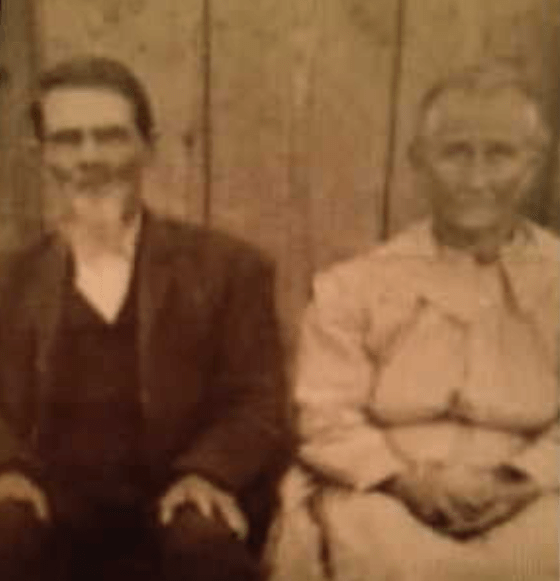
Daniel and Mary Pyatt in their elder years
Coda: This story is embellished but based on actual stories passed down in the family and documents left behind in genealogical and historical archives. You can read more about this website here: About the Site
 My Kindred Chronicles
Leave a comment